
The piloting phase of the DIGIFABS project, the SME Goes Digital Challenge, came to a very successful conclusion on January 14th with a hybrid pitch event hosted by the Slovak University of Agriculture in Nitra.
As part of the piloting phase, over 80 students from the five participating Universities attended a Summer School in Nitra, joined online bootcamps, participated in factory tours and worked with assigned SMEs to help them address specific challenges by developing digital transformation solutions, leading to the final pitch event.
Students from each institution were divided into teams, and the presentations were delivered in country blocks, with each presenter allocated three minutes to deliver the pitch for their team. Each pitch presented
- the challenge identified in the SME they worked with
- the solution they proposed
- the benefits delivered to the SME from that solution
- the feasibility of their solution
- the proposed next steps to build on the work done to date.
Each national block presentation was followed by a private jury evaluation based on standardised criteria. While the jury met, there was an opportunity for a Q & A session with participants.
The students had worked with SMEs right across the food and beverage supply chain. They presented work carried out on regenerative farms, bio energy firms, food and beverage processing businesses, as well as consumer-facing businesses like restaurants and retailers. The challenges addressed by the students included data fragmentation, quality assurance, ensuring regulatory compliance and food waste. The solutions they developed included automating reporting processes to improve efficiency, insights and compliance, integrating data to enable strategic marketing solutions addressing niche markets, Predictive AI solutions for irrigation and a digital stakeholder engagement portal to provide real-time communication.
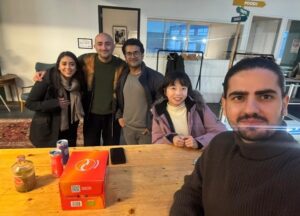 The issue of data fragmentation was a common theme identified in most SMEs, as well as the absence of a dedicated digital transformation strategy. Several of the teams confirmed that the solutions they proposed to the SMEs have already been adopted, or are in the process of being adopted. The work done by some of the teams has led to firms successfully winning grant funding to implement the solutions proposed by the students.
After a most engaging event, Team Bravo from the Amsterdam University of Applied Sciences was announced as the winning team. They had worked with Good Jamu, a wellness-driven beverage startup rooted in Indonesian tradition and based in Amsterdam.
In announcing the winner and the top five teams, jury chair Judith Helmer of FH Münster University of Applied Sciences commented on the overall high standard of the work done by students and their great ability to ‘pitch under pressure’, condensing six months of work into a three-minute pitch. Jury members commented, ‘It was great to see the variety of topics and approaches addressed by the students, and we are interested to hear what you have learned from the experience and how it has impacted you’
Each participating SME will now receive a detailed report from the student team they worked with during the SME Goes Digital Challenge. The reports will include insights, recommendations and proposed future solutions to build on the work done already. Next DIGIFABS partner University of Szczecin will lead the consortium in finalising the learning materials and preparing them for publication following feedback from the students, educators and SMEs who participated.
Follow our Social Media Channels to be the first to learn when the learning materials are published.