Summer School
Introduction
The RDDCA Summer School is a core element of the DigiFABS Course Programme. It prepares students to understand and support responsible digital transformation in Food and Beverages SMEs through a combination of online preparation, intensive collaborative learning and practical challenge-based work.
The programme connects digitalisation, sustainability, resilience and sector-specific business challenges. Its main value lies in moving students from conceptual understanding to applied problem-solving in real SME contexts.
The Summer School concept is designed as a flexible and transferable model. It can be implemented as a full mobility programme, a blended low-budget format, a local replication model or a fully online pathway, while preserving the same pedagogical logic and competence-development objectives.
The goals of the Students RDDCA Summer School are:
- Provide a comprehensive understanding of the role of Responsible Dynamic Digital Change Agents (RDDCAs) in fostering digital transformation and sustainability within SMEs.
- Equip students with cutting-edge knowledge on technology trends, sustainability practices, and resilience strategies relevant to the F&B sector.
- Enhance participants’ ability to identify and address challenges faced by SMEs, leveraging digital tools and sustainable practices.
- Prepare students for the SMEgoesDigital Challenge by integrating theoretical learning with practical team-based problem-solving exercises.
- Foster interdisciplinary collaboration and innovation, ensuring participants can effectively contribute to the future of the F&B industry.
The RDDCA Summer School is designed as a flexible learning pathway that can be adapted to different institutional calendars, mobility conditions and local business environments. The model combines online preparation, intensive collaborative learning and practical SME-oriented project work.
The model is not intended as a rigid programme format. Future organisers may adjust its duration and delivery mode while preserving the core logic:
- Preparation
- Intensive Collaboration
- SME Challenge Implementation
Phase 1 – Online Preparation
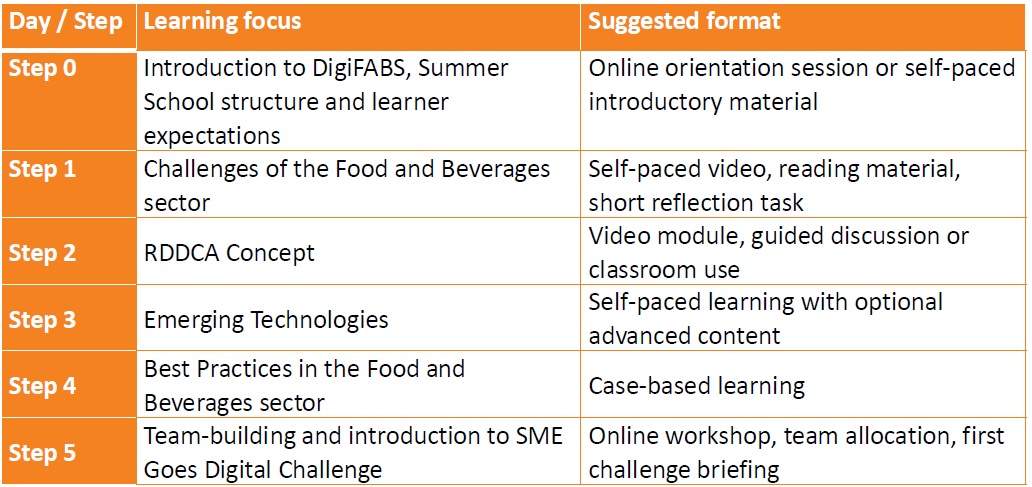
Students are introduced to the DigiFABS project, the RDDCA concept, key challenges of the Food and Beverages sector, emerging technologies and best practice examples. This phase can be implemented through self-paced video materials, guided online sessions or blended classroom use.
Phase 2 – Intensive Summer School
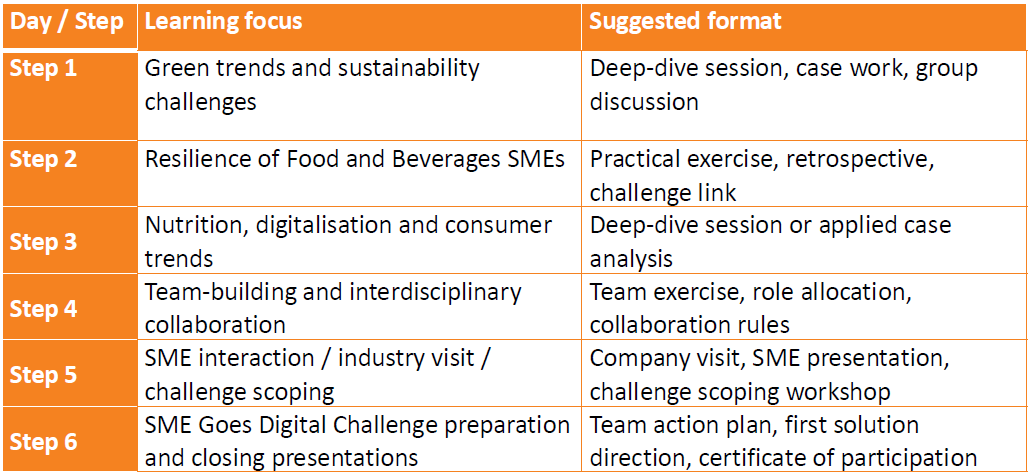
The face-to-face or blended Summer School phase focuses on deep-dive learning, interdisciplinary teamwork, company interaction, practical exercises and preparation for the SME Goes Digital Challenge. The intensive format should maximise direct interaction, intercultural exchange and team development.
Phase 3 – SME Goes Digital Challenge Preparation
During the Summer School, students are gradually introduced to real SME challenges. The initial SME matchmaking and challenge scoping should start before or during the Summer School, so that students enter the challenge phase with a clear understanding of the business context, expected outputs and available data.
Target Group
The DigiFABS Summer School is designed for a diverse audience, bringing together students from three distinct disciplines: Business, Nutrition, and Engineering. This interdisciplinary approach ensures a dynamic learning environment that caters to the unique interests, knowledge levels, and professional needs of each group.
Eligibility
– No prior F&B technical expertise required
– 3rd/4th year undergraduate or Master level
– English for teamwork and presentations
– Motivation, practical skills and SME-fit considered
Educational Disciplines
Business / management / marketing / analytics
Technology / engineering / IT / data science
Food science / nutrition / agri-food / agribusiness
Name: Felix Schneider
Age: 23
Study Program: Master of International Marketing & Sales
Favourite Channel: LinkedIn
GOALS
- Understand the role of digitalization in transforming traditional industries, like food and beverage
- Gain insights into how technology can be leveraged for innovative marketing strategies
- Connect with industry professionals and like-minded peers
PAIN POINTS
- No previous exposure to the technical aspects of the food & beverage sector
KEY MOTIVATORS
- Learning how digitalization affects consumer behavior in the food and beverage sector.
- Company visits that demonstrate real-world applications of digital tools.
- Networking with students from different disciplines to gain diverse perspectives.
INTERESTS
- Brand Strategy
- Data-driven Marketing
- Learning via Case Studies
Student recruitment should not be based only on general eligibility criteria. To support the quality of the Summer School and the later SME Goes Digital Challenge, organisers should consider the match between student profiles, practical skills and the expected needs of participating SMEs.
The recommended selection approach combines four criteria:
- study level and English proficiency,
- motivation to work on real SME challenges,
- practical skills relevant to digital transformation, sustainability, food systems or business development,
- fit between the student’s background and the available SME challenge topics.
The objective is not to select only highly technical students. The Summer School benefits from diversity. However, each student team should include a balanced mix of competences that allows the group to understand the SME context, analyse the problem and propose a feasible solution.
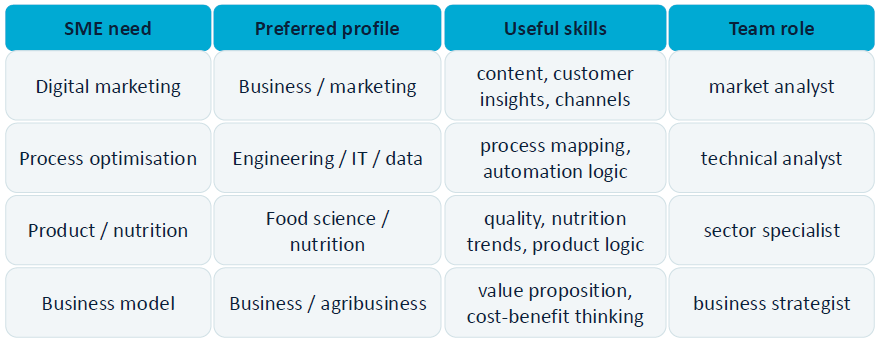
Practical rule: if a competence is missing in the student team, adapt the challenge scope or add mentor support.
The Summer School should actively support interdisciplinary student teams. A balanced team composition improves the quality of challenge analysis and reduces the risk of one-sided solutions.
Each team should ideally combine three competence lenses:
Business Lens
Focus on customer needs, market logic, business model, feasibility and communication of the proposed solution.
Technical/data lens
Focus on digital tools, data availability, process mapping, automation potential and technical feasibility.
Food sector lens
Focus on the specific characteristics of Food and Beverages SMEs, including production, nutrition, sustainability, quality, safety and sector-specific constraints.
When the ideal mix is not possible, organisers should adjust the SME challenge complexity. For example, teams without technical members should focus on digital readiness, process mapping, customer communication or low-threshold digital tools rather than advanced technical implementation.
RECOMMENDED MINIMUM COMPOSITION
- Aim for all three competence lenses in every SME team.
- One student may cover more than one lens, but no team should be formed only from one discipline.
- Match the level of challenge complexity with the team’s real technical and sectoral capacity.
- Confirm roles, communication rhythm and expected contribution before the SME Challenge starts.
Flexible Mobility and Delivery Models
The Summer School concept can be implemented through several delivery models. This flexibility allows future organisers to adapt the programme to different budgets, academic calendars, mobility constraints and institutional conditions.
Regardless of the selected model, organisers should preserve four core elements:
- structured preparation before teamwork starts,
- interdisciplinary collaboration,
- interaction with real SME challenges,
- final reflection and presentation of practical outputs.
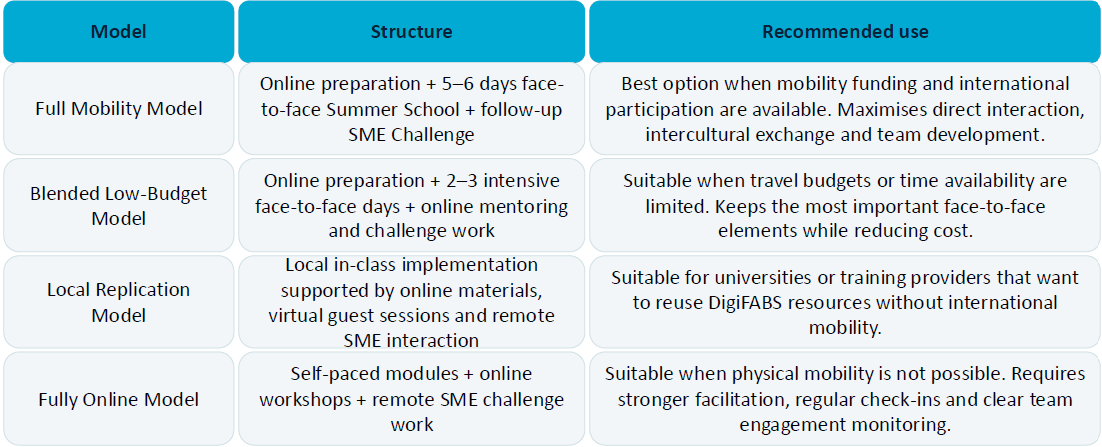
- The schedule on following slides presents a recommended structure.
- Dates and duration can be adapted to the local academic calendar, mobility model and availability of SMEs.
- The learning sequence should remain stable, but the format can be adjusted.
- The order of deep-dive topics can be adapted.
- The programme should always include a structured transition from learning modules to SME challenge preparation.
Recommended Summer School Schedule
Early SME Matchmaking and Challenge Scoping
The link between the Summer School and the SME Goes Digital Challenge should be established as early as possible. Students should not start the challenge phase with unclear expectations, limited company information or insufficient access to data.
Early SME matchmaking should therefore be integrated into the Summer School through a structured collaborative process.
1. SME pre-selection before the Summer School: Organisers identify suitable SMEs and verify their availability, motivation and capacity to provide information, data and feedback during the challenge.
2. SME challenge briefing: Each SME prepares a short challenge brief describing the company context, the problem to be addressed, expected outputs, available data and contact person.
3. Student-SME introduction: SMEs present their business context and challenge to students during the Summer School. This can take place during an industry visit, online presentation or facilitated workshop.
4. Challenge Scoping Workshop: Student teams work with facilitators and, where possible, SME representatives to clarify the challenge. The team should identify the main problem, user needs, constraints, available data, expected deliverable and first ideas for solution development.
5. Feasibility check: Facilitators verify whether the proposed challenge scope is realistic for the available time, student competences and SME capacity.
6. Team Action Plan: Before the Summer School ends, each team prepares a short action plan for the SME Goes Digital Challenge, including milestones, communication rhythm, internal responsibilities and expected outputs.
Minimum Challenge Brief Information
Each SME challenge should include:
- company profile
- challenge title
- short description of the problem
- why the problem matters for the SME
- available data
- documents or internal insights
- contact person and expected availability
- expected student output
- limitations or confidentiality issues
- possible format of final deliverable
6. Student Participation Commitment
- One of the key lessons from the pilot implementation is that student engagement must be supported beyond the face-to-face Summer School phase. To reduce the risk of declining participation during the follow-up SME Challenge, students should confirm their commitment before entering the programme.
- The commitment does not need to be a complex legal document. It should function as a clear participation agreement between students, organisers and facilitators.
Recommended Commitment Points
By joining the Summer School and SME Goes Digital Challenge, students confirm that they will:
- participate in the online preparation phase,
- attend the intensive Summer School activities,
- actively contribute to interdisciplinary teamwork,
- continue working with the team during the SME Goes Digital Challenge,
- respect agreed deadlines and communication rules,
- contribute to the final team deliverable and presentation,
- inform the facilitator in case of availability problems,
- respect confidentiality rules related to SME information,
- use feedback from educators, SMEs and peers constructively.
The Summer School should be implemented as an applied learning environment, not only as a sequence of lectures. Facilitators play a key role in connecting content, teamwork and SME challenge preparation.
Future organisers should:
- use learning materials flexibly according to local needs,
- combine self-paced content with live discussion and practical tasks,
- make the link between each module and SME application explicit,
- support interdisciplinary team roles from the beginning,
- avoid overloading students with highly technical content when their background is not suitable,
- label advanced content as optional where needed,
- include regular retrospectives and team check-ins,
- confirm that each team understands its SME challenge before the Summer School ends,
- support continued engagement after the intensive phase.
The main facilitation principle is to help students move from understanding digital transformation concepts to applying them in a concrete SME context.
Link between Summer School and SME Goes Digital Challenge
The Summer School should create a strong operational bridge to the SME Goes Digital Challenge. The challenge phase should not start as a separate activity, but as a continuation of the learning journey.
By the end of the Summer School, each team should have:
- a confirmed SME challenge
- a clear understanding of the company context
- an initial problem definition, agreed internal team roles
- confirmed communication rules
- a preliminary action plan
- first feedback from a facilitator or SME representative
- a shared understanding of the expected final output
This transition reduces ambiguity, supports student motivation and increases the likelihood that the final challenge outputs will be useful for SMEs.
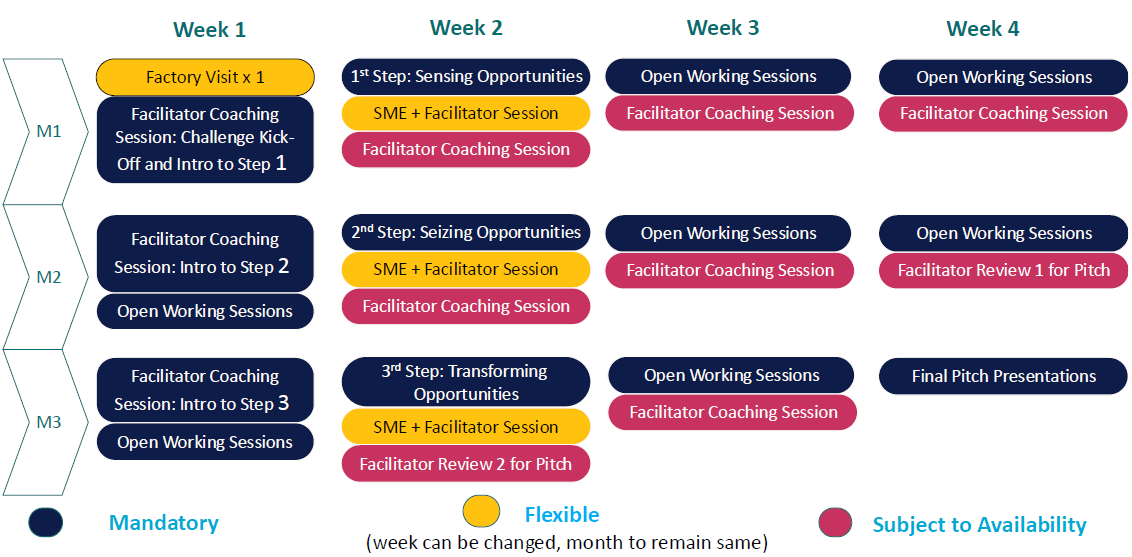
Draft Schedule for SME Goes Digital Challenge
The SME Goes Digital Challenge schedule should be understood as a flexible implementation framework. The sequence of sensing, seizing and transforming opportunities remains the core methodological logic. However, the timing of coaching sessions, SME meetings, open working sessions and pitch preparation can be adapted to the academic calendar, SME availability and team progress.
To improve continuity after the Summer School, facilitators should organise regular check-ins, monitor team engagement and support workload distribution within student teams.
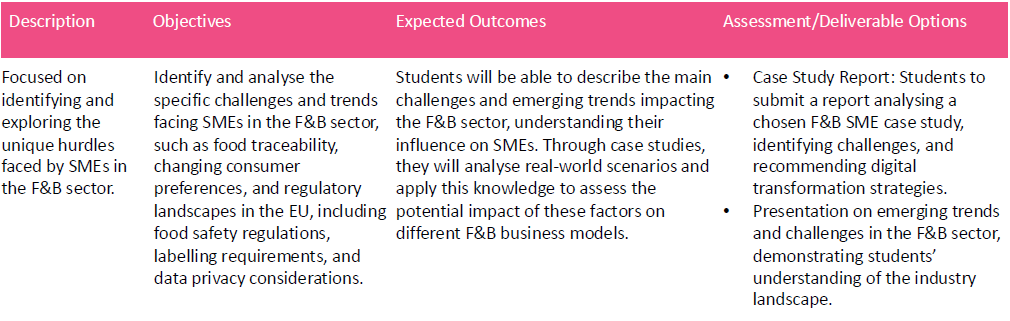
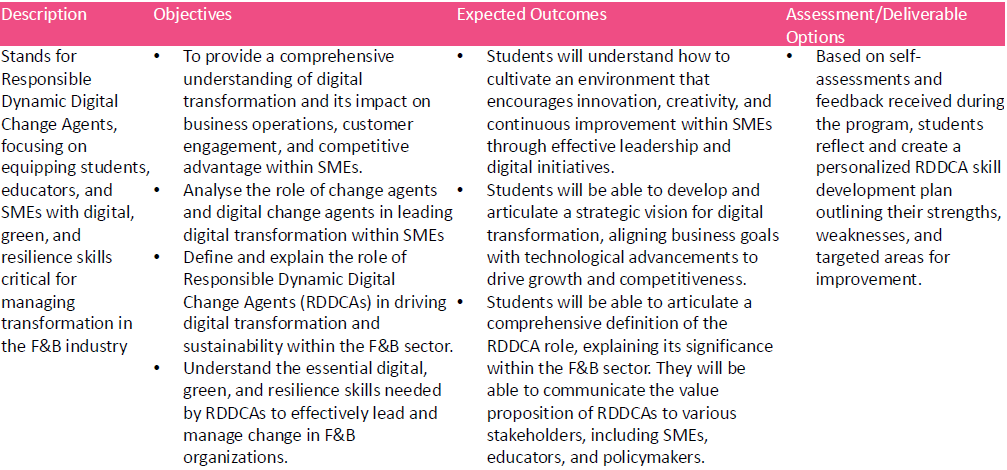
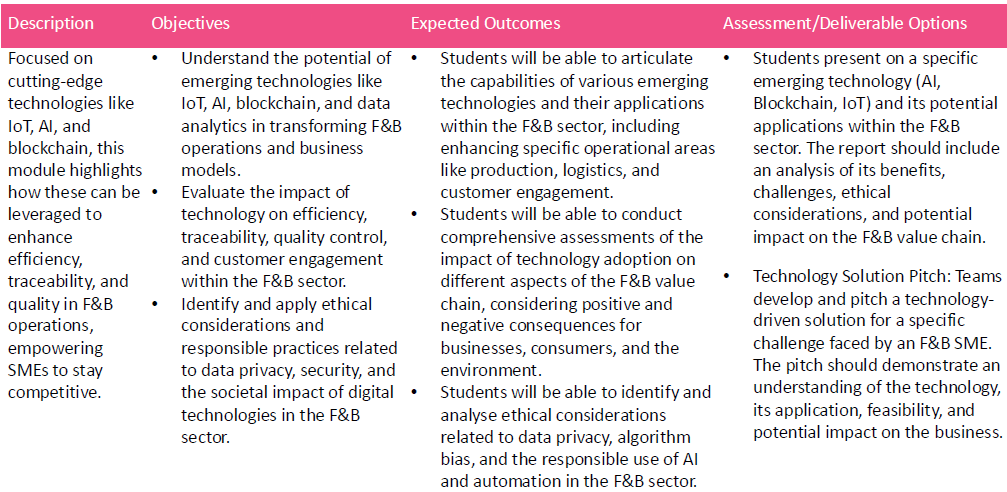
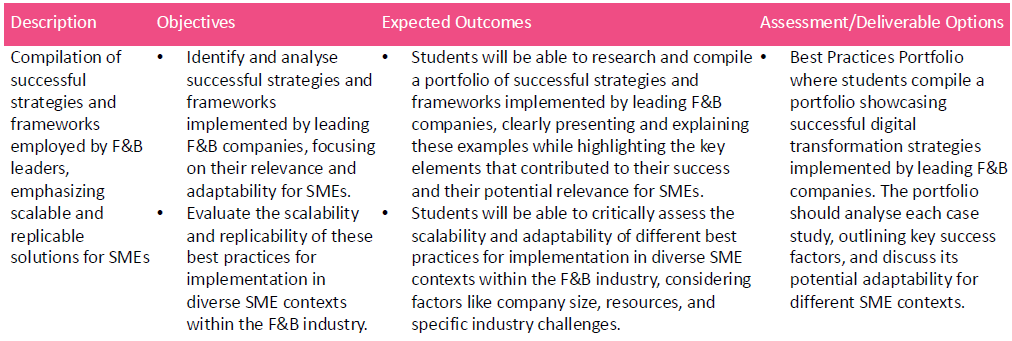
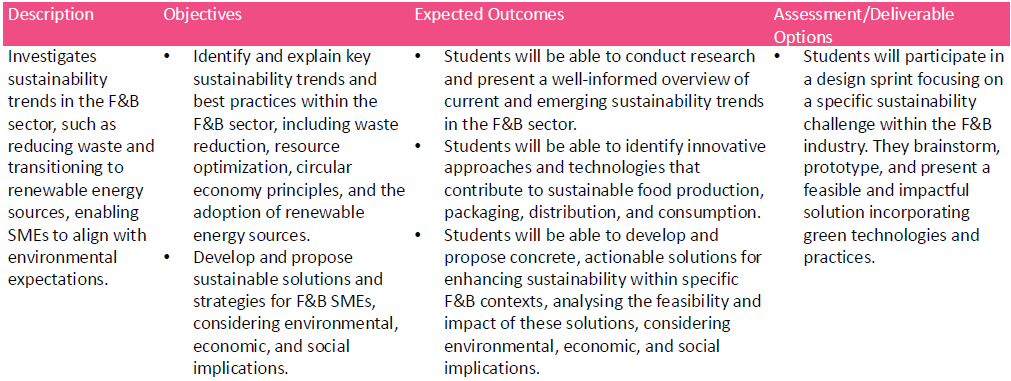
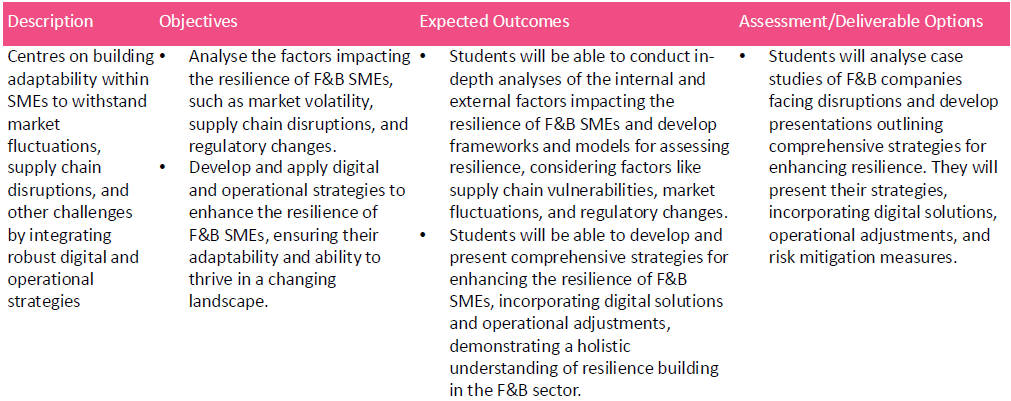
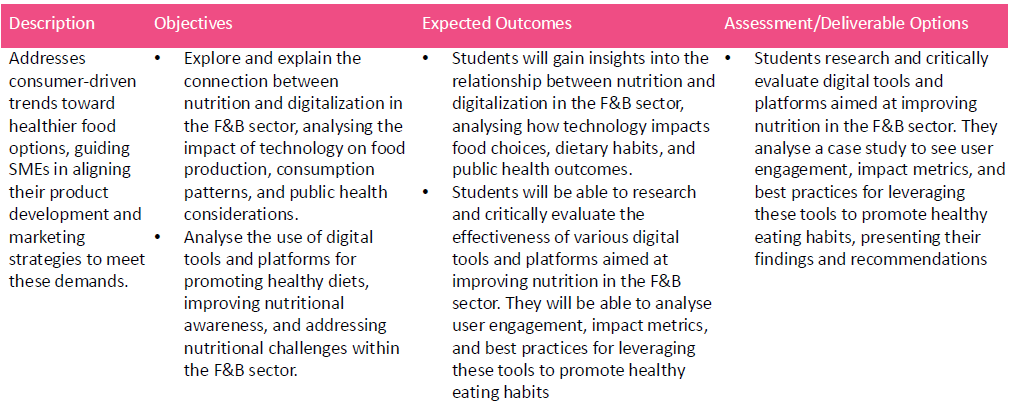
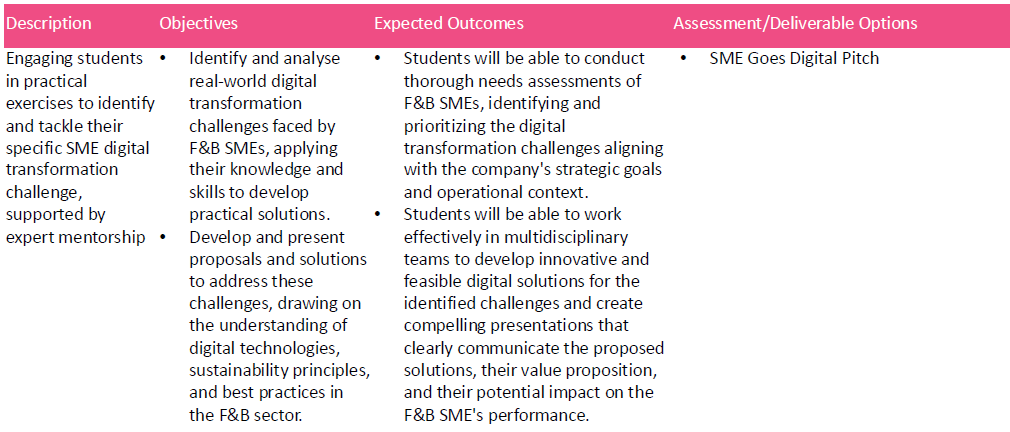
Annex: Learning Objectives and Outcomes RDDCA Modules
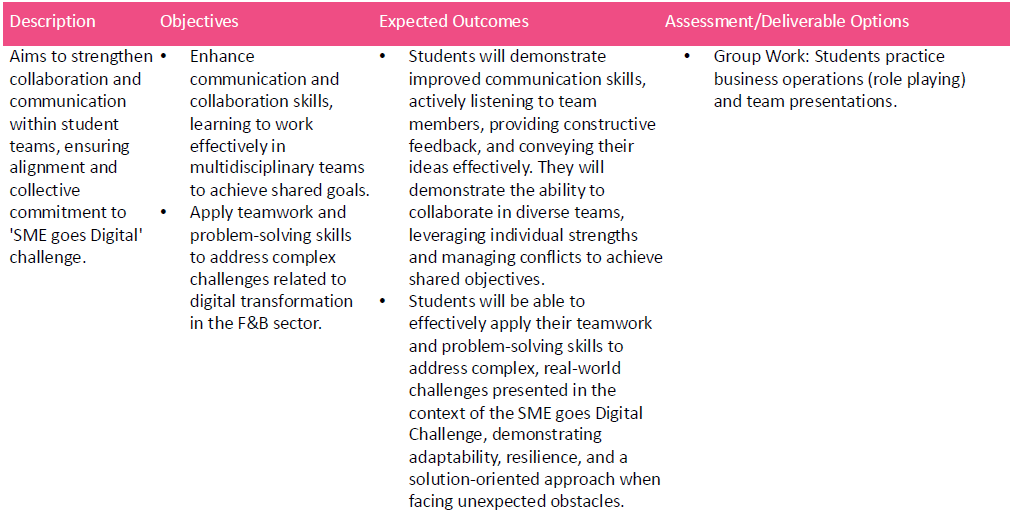
This annex summarises the learning focus, expected outcomes and possible assessment options for the RDDCA modules used within the Summer School. The module descriptions are intended as guidance for educators and organisers when adapting the Summer School to different delivery models, student profiles and SME challenge contexts.
The modules can be used flexibly. Advanced or highly technical content should be adapted to the background of the student cohort and clearly marked as optional where needed.