This partintroduces the concept of risk management, outlines practical approaches to risk assessment, and definesriskmitigationstrategies.
It will support:
Understanding on how to perceive and assess risk in a business environment
What is Risk Management
Risk management is the systematic process of identifying, assessing, prioritizing, and controlling potential threats (risks) that could negatively impact an organization’s objectives, assets, earnings, or operations.
It’s not about eliminating risk entirely but rather about understanding, minimizing, and monitoring risks to reduce their negative effects and to capitalize on opportunities that arise from uncertainty.
Key Components Of Risk Management
Risk Identification
Recognizing potential threats and vulnerabilities, such as financial uncertainties, legal liabilities, strategic errors, or natural disasters.
Risk Assessment & Prioritization
Evaluating the likelihood and potential impact of identified risks to determine which ones require the most attention.
Risk Mitigation Planning
Developing strategies and implementing actions to minimize the occurrence or impact of high-priority risks.
Risk Monitoring
Continuously tracking identified risks and the effectiveness of mitigation strategies, adjusting as needed.
Risk Identification and Assessment
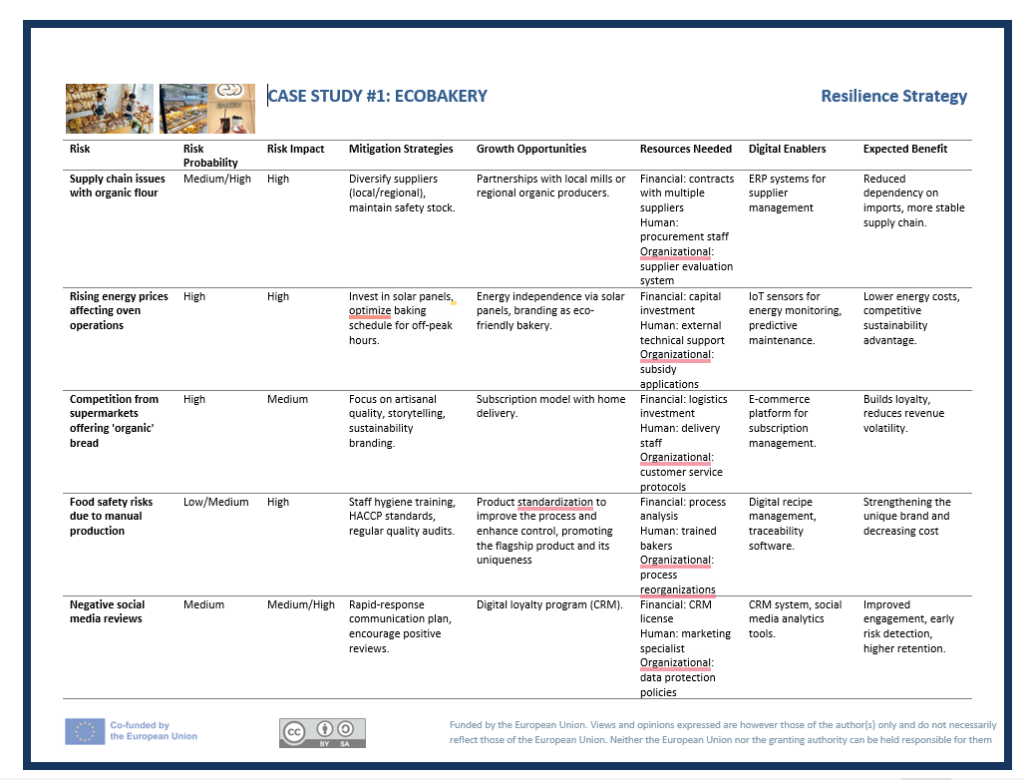
Identify and categorise risks (operational, market, regulatory, environmental, digital).
Assess:
Probability: likelihood of risk occurring. Impact: level of disruption if it occurs.