Facilitator Note: Optional Technology Track

The next section provides additional technical background on blockchain and traceability systems.

Recommended for learners interested in digital technologies, data systems or supply-chain innovation.

For business, SME or mixed groups, simplify the technical explanation and focus on practical value.

Core question: When does a digital tool create real value for an F&B SME?

Key Terms
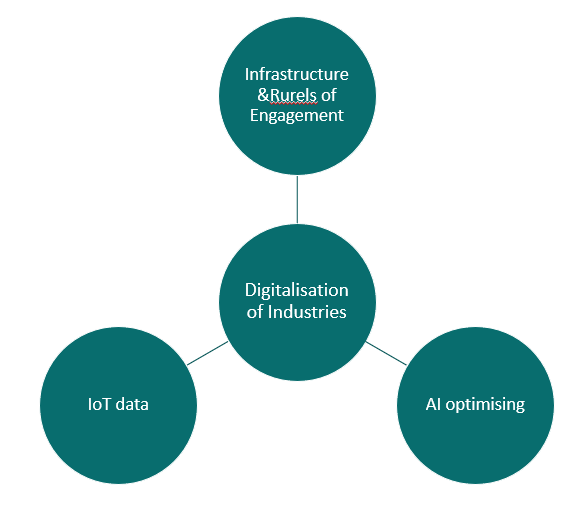
  • Digitalisation: the use of digital technologies to change a business model and provide new revenue and value-producing opportunities.
  • Internet of Things (IoT): a network of physical devices, vehicles, appliances and other physical objects that are embedded with sensors, software and network connectivity that allows them to collect and share data
  • Disintermediation: the removal of intermediaries from a supply chain.
  • Smart contract: a self-executing contract with the terms of the agreement between the two parties being directly written into lines of code.
  • Greenwashing: the act of providing the public or investors with misleading or outright false information about the environmental impact of a company’s products or operations.
Definition of a Blockchain
  • Also known as distributed ledger technology (DLT), the blockchain is a record that anyone can add to, that nobody can change, and that isn’t controlled by any one person or entity. The core concept is a public ledger with copies spread out among multiple locations called nodes, which usually refer to individual computers with copies of the ledger.
  • In other words, a blockchain is a distributed database shared among a computer network’s nodes.
What is Blockchain Technology?

Very often referred as decentralised:
  • no one person or entity has control of the information kept in the record
  • it’s distributed among the many nodes that make up the network
  • to change the record, those changes must first be verified by everyone on the network
  • as long as all copies of the record match, the system knows it can update the information
  • this increases the difficulty of changing anything stored within the blockchain while building trust in the information that’s recorded
  • Blockchain’s decentralised nature also means there’s no single point of failure that could take down the entire database
  • A company that stores all its clients’ information on a server farm in one building could lose that data if the building were destroyed.
  • Because a copy of the blockchain exists on every computer on the network at the same time, it can keep working if one or even multiple nodes go offline.
Blockchain and Agri-food Digitalisation
  • Best known for their crucial role in cryptocurrency systems for maintaining a secure and decentralised record of transactions
  • Not limited to cryptocurrency uses
  • Blockchains can be used to make data in any industry immutable—the term used to describe the inability to be altered.

Provider

Producer

Processor

Distributor

Retailer

Advantages of a Blockchain-supported agrifood supply chain:
  • Quicker, more accurate flow of information between supply chain stakeholders
  • Disintermediation – a distributed, decentralised ledger where information is verified by all stakeholders removes the need for third-party intermediaries to perform this task, thus cutting out the ‘middleman’
  • Less room for human error, data manipulation or miscommunication
  • Increased transparency
  • Increased efficiency
  • Reduced costs
  • Increased transparency and traceability thanks to Blockchain can help to reduce the chances of human error and related food waste, but it cannot eliminate all risk of contamination
  • However, even in instances where Blockchain cannot prevent contamination in the supply chain, it can still help minimize the negative impact
  • Detailed information about a product’s provenance and journey through the supply-chain can help retailers to identify exactly which products were contaminated, when, and where, in order to conduct a swift and targeted product recall
  • By increasing supply-chain traceability, Blockchain can help improve food safety and reduce food waste
VIDEO PRESENTATION

Blockchain and traceability systems - Advanced Track

RESOURCES

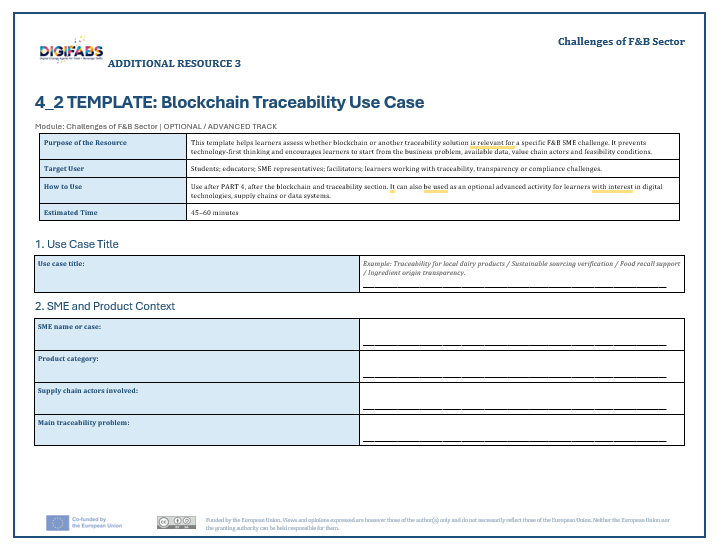
4_2 TEMPLATE

Blockchain Traceability Use Case

PPT PRESENTATION

Blockchain and traceability systems - Advanced Track